Outdoor cushions that survive a Northwest winter
The patio set looks great in July and sits in rain from October to April, so plan for that.
October 21, 2026 · 3 min read
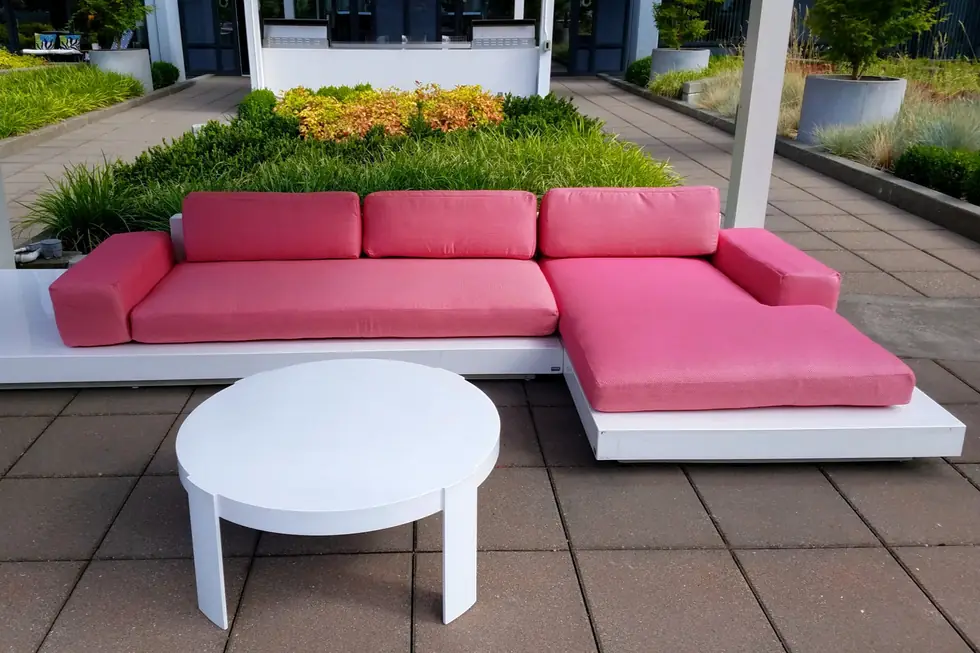
Anybody who has lived through a Northwest winter knows the routine. The patio set looks great in July, then spends October through April collecting rain, moss, and the occasional dropped fir branch. Cushions take the worst of it.
Custom indoor and outdoor cushions are among the things Sassafrassity makes, which makes this a good moment to cover the general know-how: what to look for in fabric, what's inside the cover, and how to get cushions through a wet winter without mildew.
Pick a fabric made for outdoors
Outdoor fabric isn't just indoor fabric with a hopeful label. Solution-dyed acrylics, a common choice, have color running through the whole fiber, which resists fading in sun in a way surface-printed cloth doesn't. They also tend to dry quickly and resist mildew better than cotton, which is slow to dry and happy to grow things.
Look for fabric described as water-resistant, fade-resistant, and mildew-resistant, and ask for a swatch you can set in a window for a week. Light colors show dirt, dark colors can feel hot in afternoon sun, and mid-tones hide a lot of life. A woven texture hides small spots better than a flat solid.
Think about the weather, too. Western Washington and Oregon don't get punishing desert sun, but they do get long spells of damp, and fabric that dries fast matters more here than fabric rated for the harshest UV.
What's inside matters as much as the cover
A cushion is mostly foam. For outdoor seating, open-cell foam (sometimes sold as reticulated foam) lets water pass right through, which means a soaked cushion drains and dries in hours instead of days. Standard dense foam acts like a sponge. It holds water for a long time and sours in the middle.
Fill style changes the look as well. Firm, wrapped foam gives you a crisp, tailored edge for a bench. Softer fill with a fiber wrap gives a plumper, relaxed look for a deep chair. Pillows are a different animal again, since they'll be moved, squished, and tossed around the yard.
Thickness is a comfort choice as well as a style one. A thin pad on a wooden bench looks neat but sits hard after twenty minutes. A thicker cushion feels better and looks plusher, though it needs a sturdier seam and a cover cut to match. Sit on a few at a friend's house and note which depth feels right.
Zippers help. A removable cover lets you wash the fabric and air the foam separately, and that one detail can add years to a set.
Drainage and ventilation
Water that can't leave will stay. If your chairs have solid seats, rain pools under the cushion and wicks upward. Slatted or open seat bases let air move beneath. Some outdoor cushions use vent grommets or a mesh bottom panel to let moisture out, which is worth raising when you talk through a custom order.
Ties on the back of a cushion keep it from sliding off in the wind, and they keep it from sitting crooked and holding water in a dip.
Getting through a wet winter
- Stand cushions on their edge to drain after a storm instead of leaving them flat.
- Brush off needles, leaves, and grit before they get ground into the fabric.
- Wash covers with mild soap and a soft brush, then dry them fully before they go back on the foam.
- If you won't use the set from November to March, store cushions indoors in a breathable bin or bag, never sealed up damp in plastic.
- Keep stored cushions off a bare concrete garage floor, where moisture rises.
A covered porch helps, but humidity gets in anyway. A dry shelf in the garage beats a damp deck box most days. If a deck box is your only option, slip a bag of moisture absorber in with the cushions and check on them once a month.
Measure and tell the story
For a custom set, the more you can describe, the better. Measure the seat (width and depth), note the shape of the corners, and photograph the frame. Say whether the cushions sit under a roof or take the full storm. A swing, a bench against the house, and a firepit chair out in the open all call for different choices.
Send those details and a few photos of the furniture and the yard to sassafrassity@hotmail.com, or call 503-245-2453. Clients can provide their own fabric or order through the studio, so mention which route you're leaning toward. Pick up and delivery services are available as well.
Sassafrassity, 503-245-2453
Call 503-245-2453More articles
Is this chair worth saving? A ten-minute test
Most chairs don't get thrown out because they broke, so here's how to tell what's really wrong with yours.
How to photograph a chair for an upholstery quote
A good set of pictures saves days of back and forth, and you don't need a fancy camera to take them.