Seats · backs
A fresh cane seat, pressed into the chair you already own
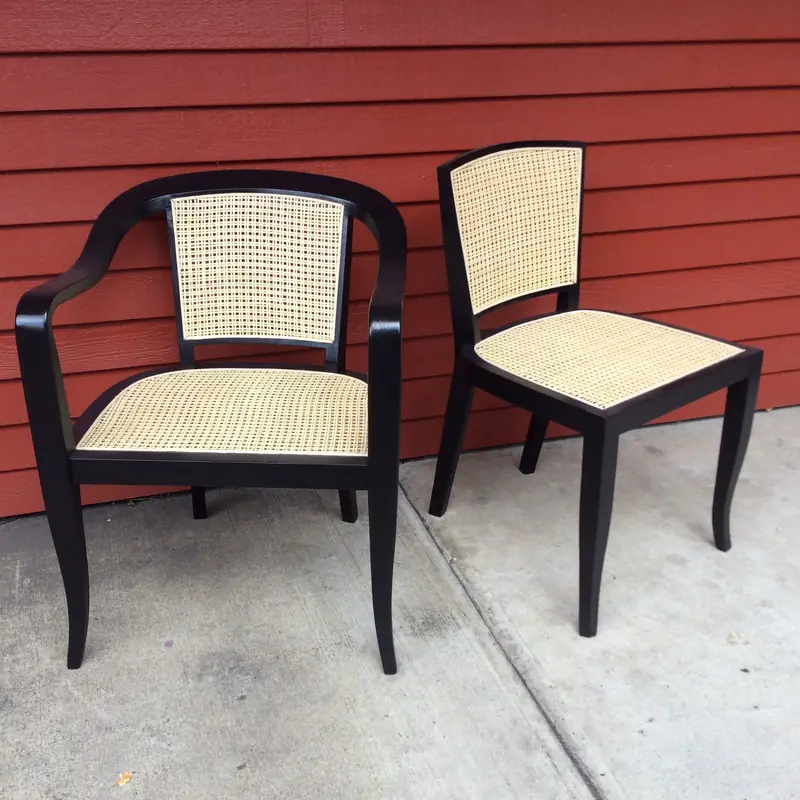
Pressed cane replaced on seats and backs, left natural or finished to match the frame.
How pressed cane gives out
Pressed cane is a woven sheet set into a groove routed around the seat or back, and it lets go in a few familiar ways. It dries out over the years and turns brittle, then splits along a strand. A seat that has sagged in the middle is a sign the weave has stretched past what it can recover from.
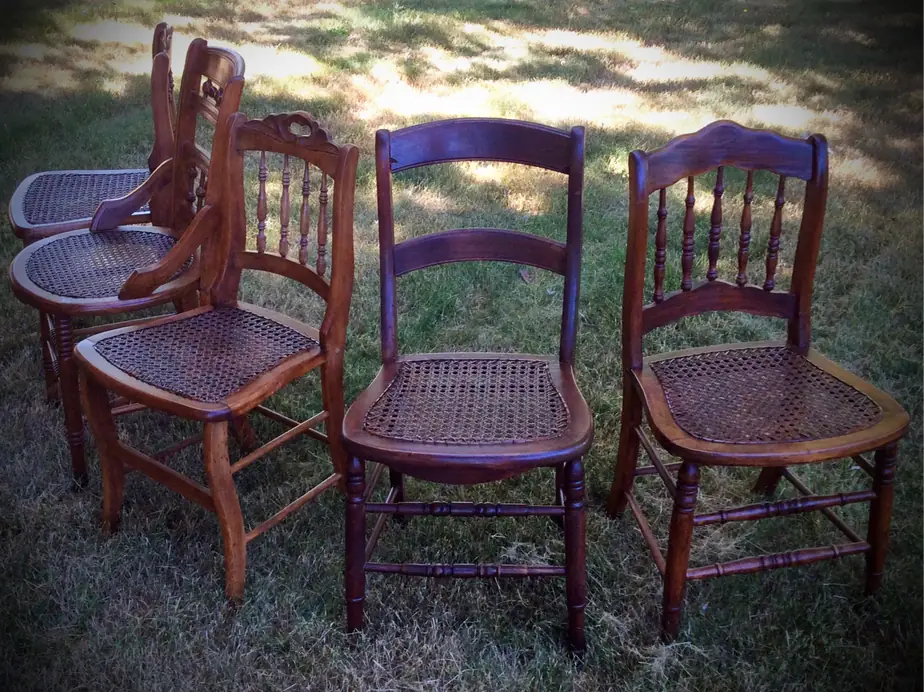
The worst case is a seat someone has gone through, with a hole punched in the middle and loose strands hanging. It looks like the end of the chair, and it usually is not. Cane gives out long before the wood does, so a frame with a ruined seat is often an excellent candidate for a fresh one.
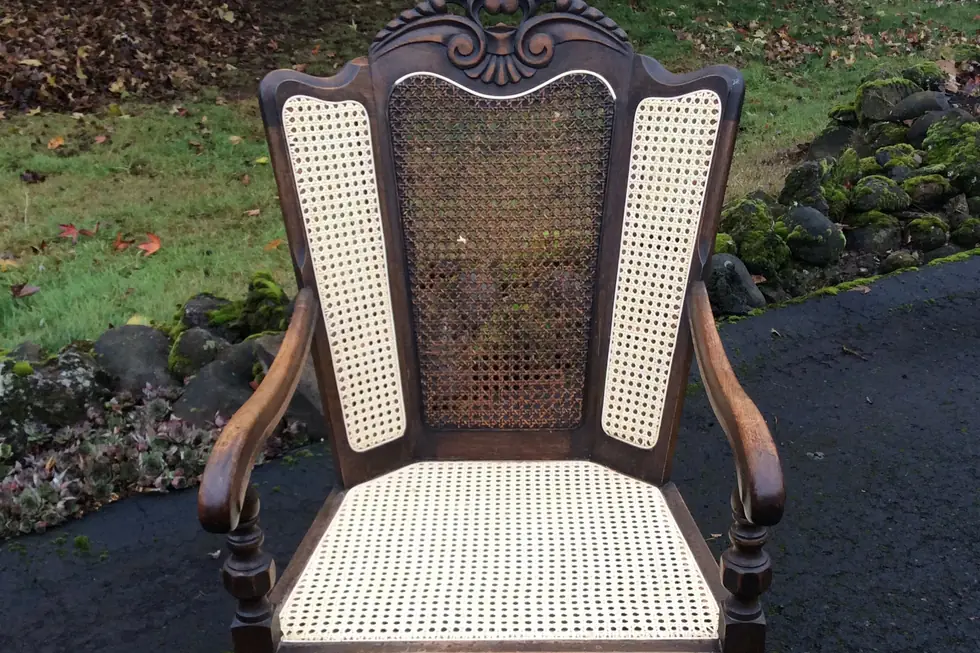
Dark wood wing chair with a cane back and a new pressed-cane seat on a lawn
Out with the old sheet, in with the new
Replacement begins with taking the old cane out. The damaged sheet is cut away, and the spline that held it is pulled from the groove along with any old glue, then the groove is cleaned so the new piece has a true channel to sit in. This step is quiet work, but it decides whether the new seat stays tight.
A new pre-woven cane sheet is trimmed, dampened so it relaxes, and pressed into the groove, then locked in place with a spline. As the cane dries it pulls taut, and the seat tightens up like a drum. The result is a firm, even surface that sits flush with the frame and is ready to be used again.
The finish is your call. Pressed cane can be left natural, showing its pale straw color, or finished to match the frame so the seat and wood read as one piece. Email a photo of the chair and its damaged seat to sassafrassity@hotmail.com, and the details of the job can be worked out from there.
Looking after a new cane seat
New cane is happiest when it is treated gently. Keep chairs out of direct heat and strong sun, which dry the strands and bring the brittleness back, and avoid standing on the seat, since cane is made to hold a sitting person and not a stepladder. Heavy, pointed loads are the usual way a good seat ends up punched through.
For cleaning, a soft brush or a vacuum with a gentle attachment clears dust out of the weave, and a lightly damp cloth handles the rest. Avoid soaking the cane, because water is hard on it and slow to leave a woven seat. A little regular dusting does more than any one big clean.
Cane can also be a hand job. Some hand cane weaving and limited small-furniture refinishing are things to ask about when you write or call 503-245-2453 from Vancouver, WA. If the chair has a piece that does not fit the standard pressed sheet, mention it in the first email, with photos, and the studio can say what is possible.
Adjusting those tones can save pieces from ending up in the landfill or hanging out in your garage.
Sample book
Two cane jobs, pinned beside the weave