Is this chair worth saving? A ten-minute test
Most chairs don't get thrown out because they broke, so here's how to tell what's really wrong with yours.
October 21, 2026 · 4 min read
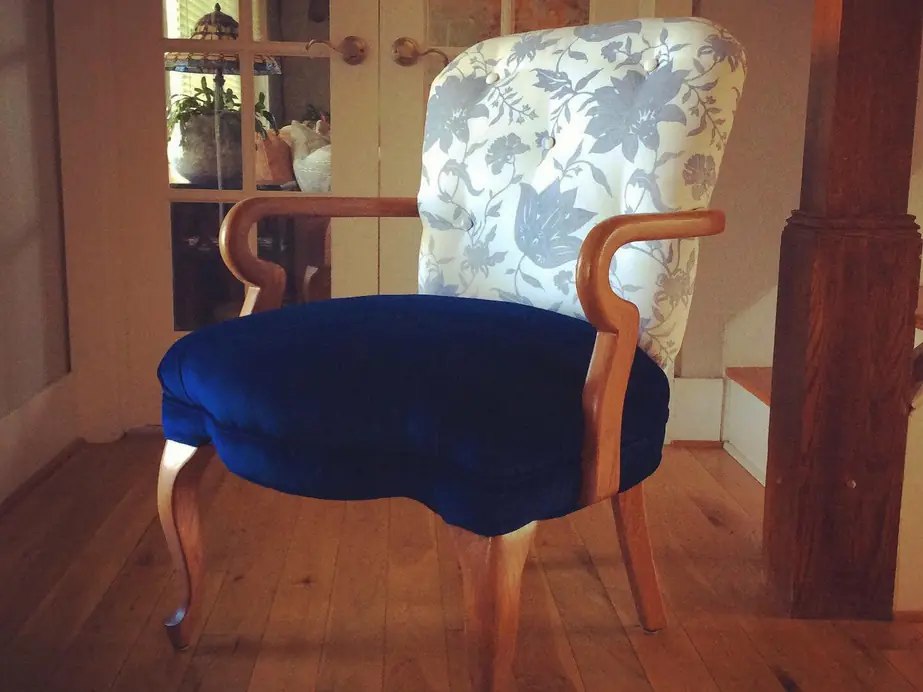
Almost everyone has one. A chair that sits in the corner of a spare room, or out in the garage under a sheet, waiting for a decision. It isn't comfortable enough to use, and it isn't bad enough to throw out. Before it lands at the curb or the donation center, give it a fair test.
Sassafrassity, a small upholstery studio in Vancouver, Washington, puts its view plainly: 'If your furniture functions for you, is well made, vintage, antique or just has sentimental value it is worth saving.' That sentence makes a pretty good checklist, so let's walk through it one piece at a time, with a few things you can check yourself in about ten minutes.
Does it still function?
Start with the plain stuff. Sit in the chair, then rock your weight side to side and front to back. A sound frame feels like one solid object. If you hear creaking, that's usually a loose joint, and a loose joint is a very different story from a frame that has cracked clean through the wood.
Next, lift the chair by the front rail and look underneath. You're looking for a seat that sags nearly to the floor, springs poking against the dust cover, or webbing that has gone slack. Sagging seats are common on older chairs and they don't mean the chair is finished. They mean the inside needs attention while the outside has been waiting patiently.
The one thing to be wary of is a frame that has been eaten or rotted. If you press the wood with a fingernail and it feels soft or crumbly, or you see fine powder under the legs, that's a sign to get a professional opinion before you spend anything on fabric.
Is it well made?
Well made is easy to spot once you know where to look. Solid wood frames are heavy for their size, and you'll feel it the moment you pick up one corner. Joints in good chairs are often doweled, or glued and braced with small triangular blocks of wood in the corners, rather than just stapled together. Flip the chair over and check those corners. Blocks and dowels are a good sign.
Weight is a decent shortcut. Lightweight chairs made of thin particleboard and staples are rarely worth a full reupholstery, while a heavy chair with thick wooden rails has plenty of life left. A chair that has already survived decades of family dinners has proven something about how it was built.
Vintage, antique, or just yours
The creed has more than one door in it, and that's deliberate. A chair can be worth saving because it's well built, because it's old, or because it belonged to somebody you loved. Any one of those is enough. Sentimental value isn't a lesser reason. If it was your grandmother's reading chair, nobody can sell you a better version at a store.
Age gives you clues too. Look for carved legs, turned spindles, hand-finished details, and a shape you don't see in current showrooms. Those are the pieces that reward new fabric, because the bones can't be duplicated by a flat-pack replacement.
Color is usually the real problem
Here's the part that surprises people. Most chairs don't get abandoned because they broke. They get abandoned because of color. The studio says it directly: 'Color drives us to love or hate our furnishings.' A mustard plaid from another decade, a floral that fights the new sofa, a brown that now feels heavy in a bright room.
The encouraging bit is that color is the most fixable thing on the list. New fabric changes the whole feeling of a piece, and the studio's line about it is worth repeating: adjusting those tones can save pieces from ending up in the landfill or hanging out in your garage. Think of the comfy chair that still fits your space but really, really needs a modern look. That's a fabric problem, not a chair problem.
The same goes for yard sale bargains you love but don't love the color. The shape is what you fell for, and the shape isn't going anywhere.
A quick scorecard
- The frame is solid when you rock it, or the loose spots are at the joints only.
- The chair is heavy for its size, with real wood rails and corner blocks underneath.
- It fits a room you actually have, at a size that works.
- You like the shape, the arms and the legs, even if you can't stand the fabric.
- It's old, handmade, or tied to a person you care about.
If you can check three or four of those, keep going. If you're stuck on the frame question, a few photos will tell more than a long description does.
Ask before you decide
You don't have to make the call alone. If you're on the fence about a chair, email a few pictures to sassafrassity@hotmail.com, or call 503-245-2453, and tell the studio what you're hoping the piece will do for your room. Pick up and delivery services are available, so a heavy armchair doesn't have to ride home in your back seat. The worst outcome is a straight answer, and that's worth having.
Sassafrassity, 503-245-2453
Call 503-245-2453More articles
How to photograph a chair for an upholstery quote
A good set of pictures saves days of back and forth, and you don't need a fancy camera to take them.
Pressed cane or hand-woven cane: which one is on your chair?
Two kinds of cane fail in different ways, and a couple of photos will tell you which one you have.