Choosing upholstery fabric you won't regret in a year
Start with the room, match the cloth to the wear, and bring a few pictures to the conversation.
October 21, 2026 · 4 min read
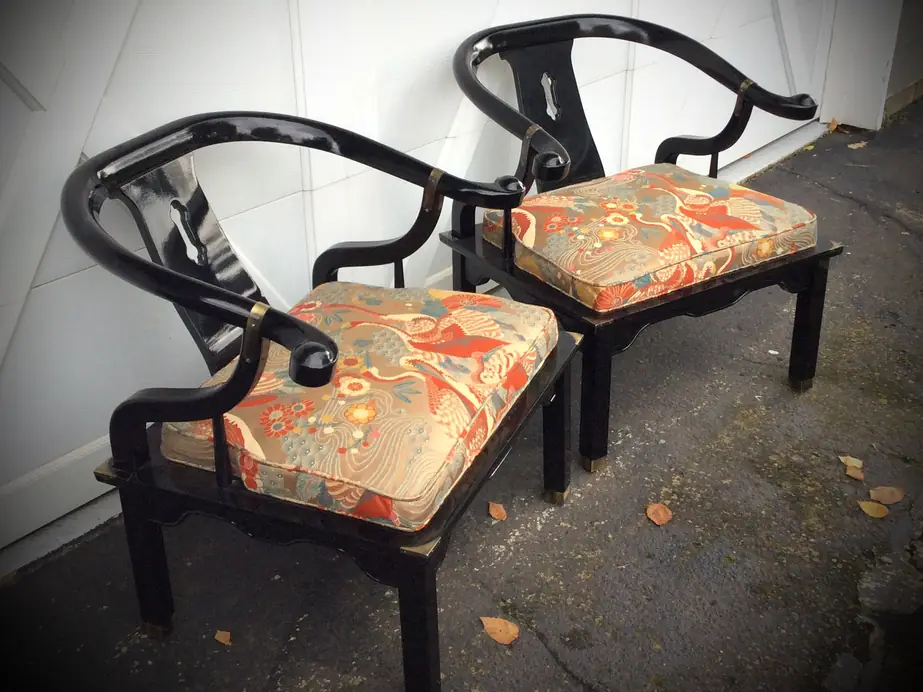
Picking fabric is the fun part and the stressful part, usually in the same afternoon. There are hundreds of options, a swatch looks different on your lap than on a chair, and the piece you're covering will be around for years.
Sassafrassity's way of handling this is a conversation. Clients email pictures of the furniture, ideas they like, and the room it's going in, and the owner works with them to narrow the choices to final selections. These notes follow the same logic, so you can arrive at that conversation with a head start.
Start with the room, not the swatch
Color drives us to love or hate our furnishings, as the studio's creed puts it, so it deserves the first decision. Look at the room the chair is going into. What are the biggest blocks of color: walls, rug, sofa? A chair can quietly match one of them, or it can be the one confident accent in an otherwise calm room.
Decide which job your chair has. A matching chair disappears into the scheme. An accent chair is supposed to be noticed, and that gives you permission to go bolder than you'd dare on a sofa. A single piece in deep teal, mustard, or a saturated rust can pull a whole room together.
Light matters too. Fabric looks cooler in north light and warmer in the evening under lamps. Tape a swatch to the chair and look at it at breakfast and again after dark.
Match the wear to the job
An accent chair in a guest room sees almost no use. A dining chair or barstool gets sat on every day, scooted across floors, and dripped on at dinner. Those are different jobs, and they want different cloth.
For daily-use pieces such as dining chairs, barstools, and benches, look for tightly woven fabrics. Performance weaves, tight-weave cotton blends, and many synthetics handle abrasion better than loose, nubby, or delicate cloth. Ask for a rub count (the 'double rub' rating) if the seller can give you one, since higher numbers mean more wear before the fabric shows its age. For seats, a darker or mottled fabric hides small spills well.
- Rub a swatch with your thumbnail. Does it fuzz or snag?
- Pinch and release. Does it spring back or stay wrinkled?
- Hold it up to a window. Can you see through the weave?
- Tug it on the diagonal. Does it stretch out of shape?
Ottomans and headboards sit somewhere in between. A headboard touches hair and shoulders but little else, and an ottoman gets feet and trays. Think about who will actually use the piece, and whether there are pets or kids in the picture.
Patterns and curved chairs
Pattern on a flat seat is easy. Pattern wrapped around a curved club chair is another matter. A large print can get distorted by a sharp curve, and stripes bend around arms in ways that surprise you. Small, even patterns and textures are forgiving, since they flow around a curve without drawing attention.
If you love a big pattern, picture where the main motif will land. Centered on the back works for some chairs, while on others it gets split across a seam. Pattern matching takes extra fabric and careful cutting, so mention it when you talk through quantity. Solids and subtle textures let the chair's shape be the star.
Bring your own or order through the studio
You have two routes. Clients can provide their own fabric, say a remnant you found, something you've been saving, or a bolt from a shop you love. Or you can order from Charlotte Fabrics through the studio, and the owner helps you narrow the choices.
If you're bringing fabric, send a photo plus the fiber content and width if you know them, and ask how much your piece will need before you buy. Chairs eat more yardage than people expect, especially with patterns, and curved backs want extra.
If you're ordering, the benefit is the narrowing itself. Rather than facing a catalog alone, you get someone looking at your photos and your room and helping you land on a final selection.
Bring the ideas, send the pictures
Collect two or three looks you love and one or two you don't, and send them with photos of the piece and the room. Describing what you hate is useful. Dislikes narrow things as fast as likes do.
Email everything to sassafrassity@hotmail.com, or call 503-245-2453 to talk first. And if you already know what you want, the invitation is simple: send a picture and details, and a quote comes back as quickly as the owner can manage. Pick up and delivery services are available if the chair needs a ride.
Sassafrassity, 503-245-2453
Call 503-245-2453More articles
Is this chair worth saving? A ten-minute test
Most chairs don't get thrown out because they broke, so here's how to tell what's really wrong with yours.
How to photograph a chair for an upholstery quote
A good set of pictures saves days of back and forth, and you don't need a fancy camera to take them.